
Bradford Property Market Update April 2026
The property market in Bradford remains resilient in April 2026, supported by affordability, a growing population, and continued momentum following its 2025 UK City of Culture year. Official data shows average house prices rising from £185,000 in January 2026 (up 4.8% year-on-year) to £187,000 in February (up 6.7%), outperforming the wider Yorkshire and the Humber region in recent months. Broader estimates suggest a 12-month average of around £210,000, with a median closer to £182,000, highlighting variation across property types and areas.
Rental demand is also strong, with average private rents reaching £732 per month in February 2026, a 3.9% annual increase. Attractive yields, especially in inner-city postcodes, continue to draw investor interest. Overall, Bradford’s market reflects a balance of steady growth, strong demand, and ongoing regeneration, making it appealing to both buyers and landlords despite a more cautious national property climate.
Table of Contents
Overview of the Bradford Property Market
The Bradford property market offers a unique mix of affordability, strong rental demand, and steady long-term growth. Compared to many other UK cities, property prices in Bradford remain relatively accessible, making it an attractive option for first-time buyers, families, and investors alike. At the same time, ongoing regeneration projects and improved transport links continue to support rising demand across key areas.
In recent years, Bradford has seen consistent price growth alongside solid rental yields, particularly in well-connected postcodes and areas close to the city centre. As the market evolves in 2026, understanding these local dynamics is essential for anyone looking to buy, sell, or invest, helping you make informed decisions in a competitive yet opportunity-rich environment.
Local Statistics and Economic Context
Bradford District has a population of approximately 547,000, making it one of the youngest and most diverse areas in the UK. Projections estimate an additional 3.7% growth (around 20,000 residents) by 2030, which will continue to drive demand for both sales and rental properties. The local economy, valued at over £11 billion, spans manufacturing, logistics, healthcare, education, and an expanding creative and cultural sector. Employment rates for working-age residents hover near 71-72%, with over 30,000 students supported by local universities and colleges.
Infrastructure improvements, including enhanced services at Bradford Forster Square station and public realm upgrades linked to the City of Culture, have improved connectivity and livability. The district’s strategic location within West Yorkshire provides good access to Leeds and beyond. Bradford remains significantly more affordable than neighbouring Leeds, where average prices exceed £244,000–£250,000. This gap supports the inward migration of buyers and tenants seeking better value.
House Price Trends
House price growth in Bradford has been modest but positive in early 2026. ONS provisional figures show clear year-on-year increases, though monthly movements remain small.
Key recent data:
January 2026: £185,000 (+4.8% on January 2025)
February 2026: £187,000 (+6.7% on February 2025)
Transaction volumes for the district have been slightly lower than peak periods, reflecting national sensitivity to mortgage rates and economic conditions. However, Bradford has frequently featured in indices highlighting strong buyer demand relative to available stock, especially for entry-level and family homes.
Price Trends by Property Type
Price Performance Across Key Postcodes
Prices and growth differ notably by postcode:
Inner postcodes offer the lowest entry points, while Saltaire and outer northern areas have recorded relatively faster growth due to lifestyle and amenity factors.
Demand Hotspots
Demand is spread across distinct zones:
City Centre (BD1): Regeneration projects, including the planned City Village development (aiming for around 1,000 new homes), cultural venues, and improved public spaces, are boosting appeal for students, young professionals, and urban buyers. The area is often cited as undervalued with long-term potential.
Inner Southern and Eastern Wards (BD5, BD7, BD8): Affordable terraced stock attracts families and working tenants. Proximity to employment, transport links, and the university supports consistent activity. BD8 (Manningham/Girlington) and BD7 (Great Horton) are particularly active for both sales and rentals.
Suburban Areas (BD2, BD6, BD9): These locations offer a mix of family homes with reasonable access to schools and green spaces. BD2 has been noted for solid demand and quicker sales in some reports.
Outer and Village Locations (BD10, BD13, Saltaire/BD18): Higher price bands but strong family and commuter demand. Saltaire benefits from UNESCO heritage status, amenities, and good links to Bradford and Leeds, contributing to relatively stronger price appreciation.
Emerging interest is growing in southern gateway areas such as parts of BD4 and BD5, linked to potential transport and regeneration improvements.
Rental Demand Overview
The rental sector remains a cornerstone of Bradford’s market. Average private rents stood at £732 per month in February 2026, up 3.9% year-on-year.
Demand comes from multiple groups: students and young professionals near educational sites and the city centre; families seeking 2- and 3-bedroom homes in inner and suburban wards; and key workers in logistics, healthcare, and public services. Well-maintained properties in accessible locations tend to let quickly, with supply constraints in popular segments supporting rental values.
Rental Yields and Investor Insights
Bradford offers some of the more competitive gross rental yields in the UK, driven by low purchase prices and steady tenant demand. District-wide averages are frequently reported between 5–7%, with inner-city postcodes delivering significantly higher returns.
Examples of yields by postcode (approximate ranges from market analyses):
BD1 (City Centre): Often 10–12%+ due to very low entry prices combined with rental demand.
BD3, BD5, BD8: Typically 6–9%, strong for cash-flow focused investors.
BD4, BD6, BD7: Around 5.5–7%, balancing yield with family tenant stability.
Suburban/Outer (BD9, BD10, BD18): Generally 4.8–6.5%, with greater emphasis on long-term occupancy and potential capital growth.
Yields in certain inner postcodes stand out nationally, making Bradford attractive for buy-to-let investors seeking income. Family tenancies often provide lower turnover compared to student lets, though compliance with licensing, energy efficiency, and maintenance standards remains essential.
Regeneration and Infrastructure Developments
The legacy of the 2025 UK City of Culture continues to influence the market. In 2026, additional funding (including £1m+ from government and National Lottery sources) supports ongoing cultural programming, permanent venues, and community projects. The City Village scheme in the centre aims to deliver new homes, business space, and improved public areas, with construction phases expected to start progressing.
Other initiatives include public realm enhancements, retail repositioning (such as Kirkgate redevelopment), and transport upgrades. The broader “Built Different” Regeneration and Growth Plan targets substantial new housing delivery alongside employment opportunities through to 2035. These efforts are gradually enhancing the city’s profile and livability, with potential positive spillover effects on surrounding neighbourhoods.
Improved rail connectivity and discussions around southern gateway improvements (affecting ) are also noted as factors that could support future demand.
Buyer Considerations
First-time buyers benefit from relatively low entry prices, particularly for terraced homes in the £130,000–£150,000 range. Areas with good transport links and improved amenities offer practical starting points. Stamp duty relief and Help to Buy schemes (where applicable) can further assist.
Family buyers tend to favour suburban and village locations with better schools and green space access, such as parts of BD2, BD9, BD10, and Saltaire. These areas often provide more space at prices still below regional averages.
Key factors to assess include property condition (many older terraces require modernisation), flood risk in certain zones, school performance, and local crime statistics. Energy efficiency upgrades are increasingly important for long-term costs and tenant appeal. First-time buyers benefit from relatively low entry prices, particularly for terraced homes in the £130,000–£150,000 range. Areas with good transport links and improved amenities offer practical starting points. Stamp duty relief and Help to Buy schemes (where applicable) can further assist.
Family buyers tend to favour suburban and village locations with better schools and green space access, such as parts of BD2, BD9, BD10, and Saltaire. These areas often provide more space at prices still below regional averages.
Key factors to assess include property condition (many older terraces require modernisation), flood risk in certain zones, school performance, and local crime statistics. Energy efficiency upgrades are increasingly important for long-term costs and tenant appeal.
Challenges in the Market
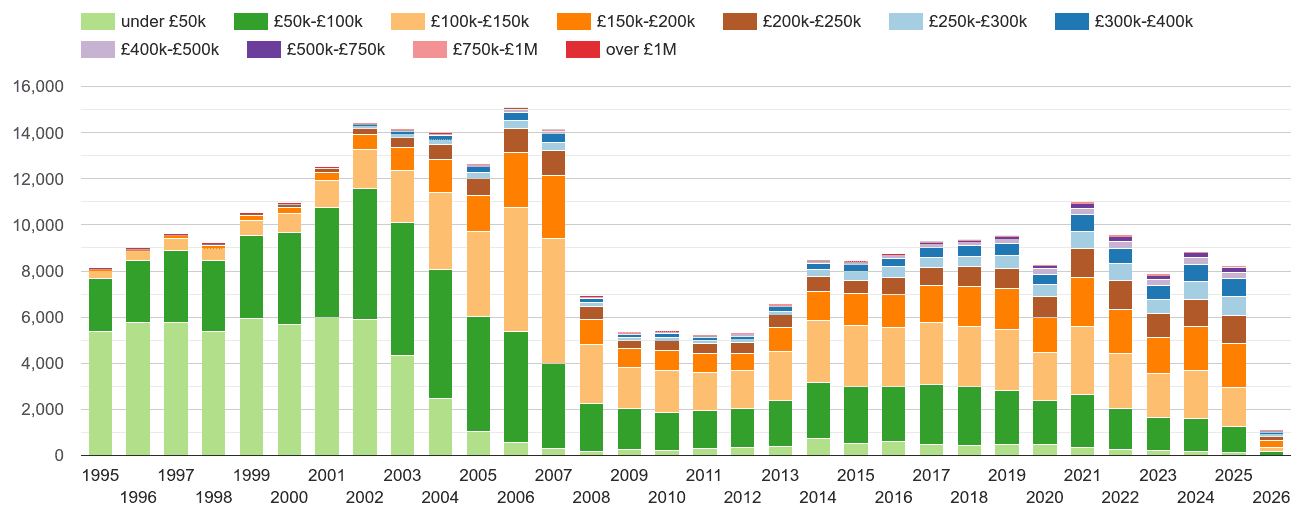
Several factors temper the market. Transaction volumes remain sensitive to mortgage rates and economic uncertainty. Many properties, especially older terraces, need investment in modernisation, which can stretch budgets for first-time buyers.
Pockets of deprivation in some inner wards continue to affect perceptions of desirability and long-term value. Variation in school quality and green space provision influences family choices.
Opportunities in the Bradford Market
Bradford’s affordability creates an accessible entry for both owner-occupiers and investors. Population growth and household formation provide structural demand support.
Regeneration activity offers potential for localised value uplift, particularly in city-centre and southern corridor areas. Value-add opportunities exist through thoughtful renovation of existing stock, especially in high-yield postcodes. Investors can target strong cash flow in inner areas or more balanced yield-plus-growth profiles in suburbs.
Longer-term forecasts (such as Savills projections for Yorkshire) suggest cumulative price growth potential of around 25–28% by 2030, with Bradford well-placed for catch-up due to its lower base.
Market Outlook for 2026 and Beyond.
National forecasts for 2026 generally anticipate modest UK house price growth of 2–3.5%, with more affordable northern regions potentially performing at the higher end due to demand and relative value.
In Bradford, steady population growth, cultural legacy initiatives, and planned regeneration are expected to support balanced activity, particularly in the £150,000–£250,000 segments. Rental demand should remain resilient, though annual growth may moderate to more sustainable levels (around 3–5%) if new supply increases.
Longer-term to 2030, Bradford’s combination of demographic trends, infrastructure investment, and affordability positions it for gradual appreciation, subject to the successful delivery of housing and economic plans.
Retaining full tenancy history
Digital systems reduce errors and improve efficiency.
Conclusion
Bradford’s property market in April 2026 offers a compelling mix of affordability, solid rental demand, and competitive yields. While challenges such as property condition and localised deprivation persist, the district benefits from strong structural drivers, including population growth, regeneration momentum, and a clear price advantage over neighbouring cities.
For first-time buyers, it provides a realistic route onto the property ladder. Families can find practical housing in suburban and village areas, while investors benefit from attractive income returns, particularly in inner postcodes. With steady progress expected in 2026 and beyond, Bradford remains a market worth watching for those seeking value and long-term potential in West Yorkshire.
Need a clear breakdown of the Bradford property market trends this month? Contact Armaani Estates now.
FAQs
What is the current average house price in Bradford?
Provisional ONS data suggests an average of around £187,000 as of February 2026, while broader market estimates place averages closer to £210,000 depending on data source, timing, and property mix. Prices vary significantly by postcode and property type.
Which areas offer the highest rental yields in Bradford?
Higher rental yields are typically found in BD1 (city centre), which can exceed 10% in some cases. Inner postcodes such as BD3, BD5, and BD8 often deliver strong returns in the 6–9% range due to lower purchase prices and consistent rental demand.
Is Bradford suitable for first-time buyers in 2026?
Yes. Bradford is considered attractive for first-time buyers due to relatively low entry prices, especially for terraced homes and starter family properties, compared to nearby cities like Leeds and the wider UK average. Careful assessment of property condition remains important.
How does Bradford compare to Leeds for investment?
Bradford generally offers lower purchase prices and higher rental yields, making it attractive for income-focused investors. Leeds, on the other hand, tends to deliver stronger long-term capital growth, higher property values, and more premium market segments.
What impact has the City of Culture had on the market?
The City of Culture status has improved Bradford’s national profile, supported regeneration funding, and contributed to upgraded infrastructure and cultural investment. These effects are expected to continue influencing regeneration and demand into 2026 and beyond.
Which postcodes show emerging potential in Bradford?
BD1 is benefiting from ongoing city-centre redevelopment, while BD4 and BD5 are gaining attention due to regeneration prospects and transport links. These areas are increasingly viewed as having long-term growth potential.
What risks should investors consider?
Key risks include unexpected renovation costs, variations in property condition, localised socioeconomic factors, regulatory changes such as energy efficiency requirements, and sensitivity to broader UK economic conditions. Careful due diligence is essential before investing.
